Jet stream analysis - is blocked, cold weather turning more likely?
Not really sure how this stuff really, works, but I'll have a look at AAM
The drop in AAM, at least for now, and it will likely remain weakly negative
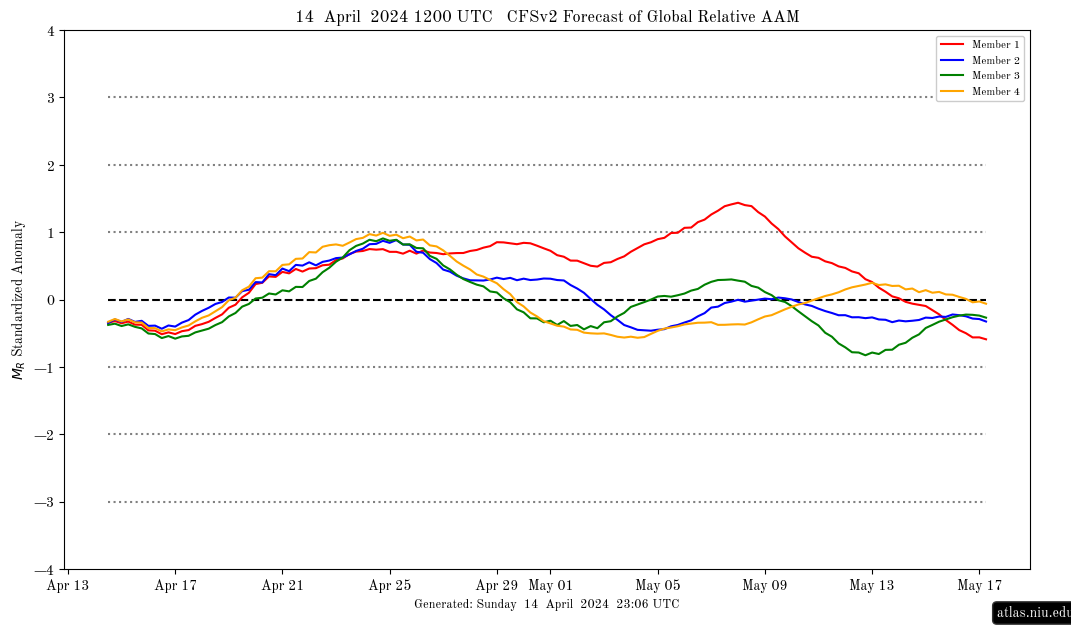

The January weakening of AAM seems to have led to the polar jet stream largely weakening, while the subtropical jet stream has weakened and shifted south, while the stalling in the decrease in AAM may have led to the polar jet stream shifting north, into the high latitudes (70 to 90N)
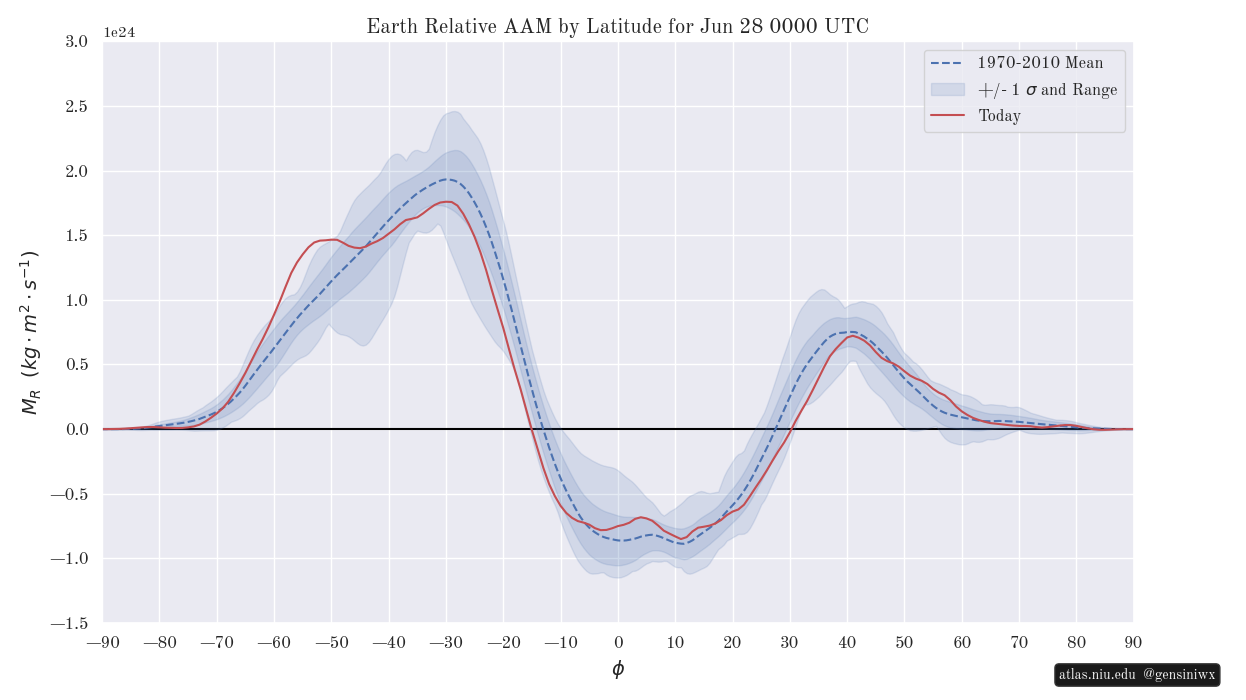
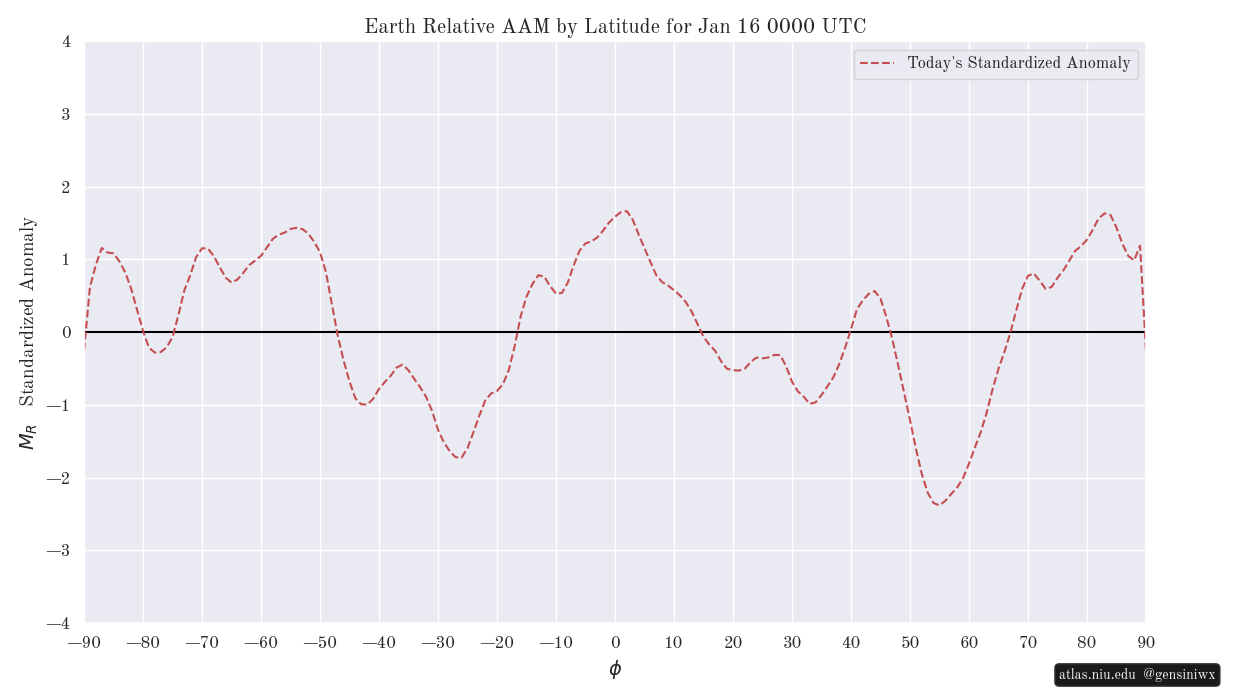
My educated guess is that the weakening and shifting south of the subtropical jet stream will likely lead to less influence from the Azores high and southern Europe highs on our weather, so a lesser risk of them ruining the potential cold spell. Meanwhile, the polar jet stream, that's tends to be on the same latitude of us, weakens and is displaced north, causing a raise of pressure in the high latitudes.
My guess is that both the jet streams moving away from each other would increase the amplitude of Rossby waves and the jet stream, which supports blocked patterns that can cause anomalous warm, or cold (which is more relevant at the moment) weather. However, the weakening of AAM on both sides would make these patterns less anchored and resilient, so there's more of a signal for waxing and waning of blocking that fails to consistently take hold, but this can still be supportive of cold easterlies, but it is much more precarious
I urge this to be taken with a massive grain of salt, because these are just merely educated guesses


Comments
Post a Comment