Mid-range weather forecasting: why summer warmth is being underestimated
I remember last summer and late spring, where dreaded breakdowns of warm weather patterns to persistently cool, wet weather in weather models kept being downgraded to what was closer to average conditions. It relates to how weather models often incorrectly predict or underestimate the impact of SSTs on atmospheric circulation at 3+ days out and correct themselves closer to the time. An implication for this is that the longevity of "heat domes" can be underestimated by weather models in the context of global warming.
The first reason for SSTs causing warm, dry weather is that a weaker AMOC, freshwater in the North Atlantic and cold blob are linked to a stronger Icelandic Low, causing southerly, anticyclonic conditions to dominate in late spring and early summer, when the cold SSTs in the North Atlantic are more pronounced from melting retreating ice in summer. Last spring, we saw some very stark, cold SST anomalies, which lead to a heatwave in April and May.
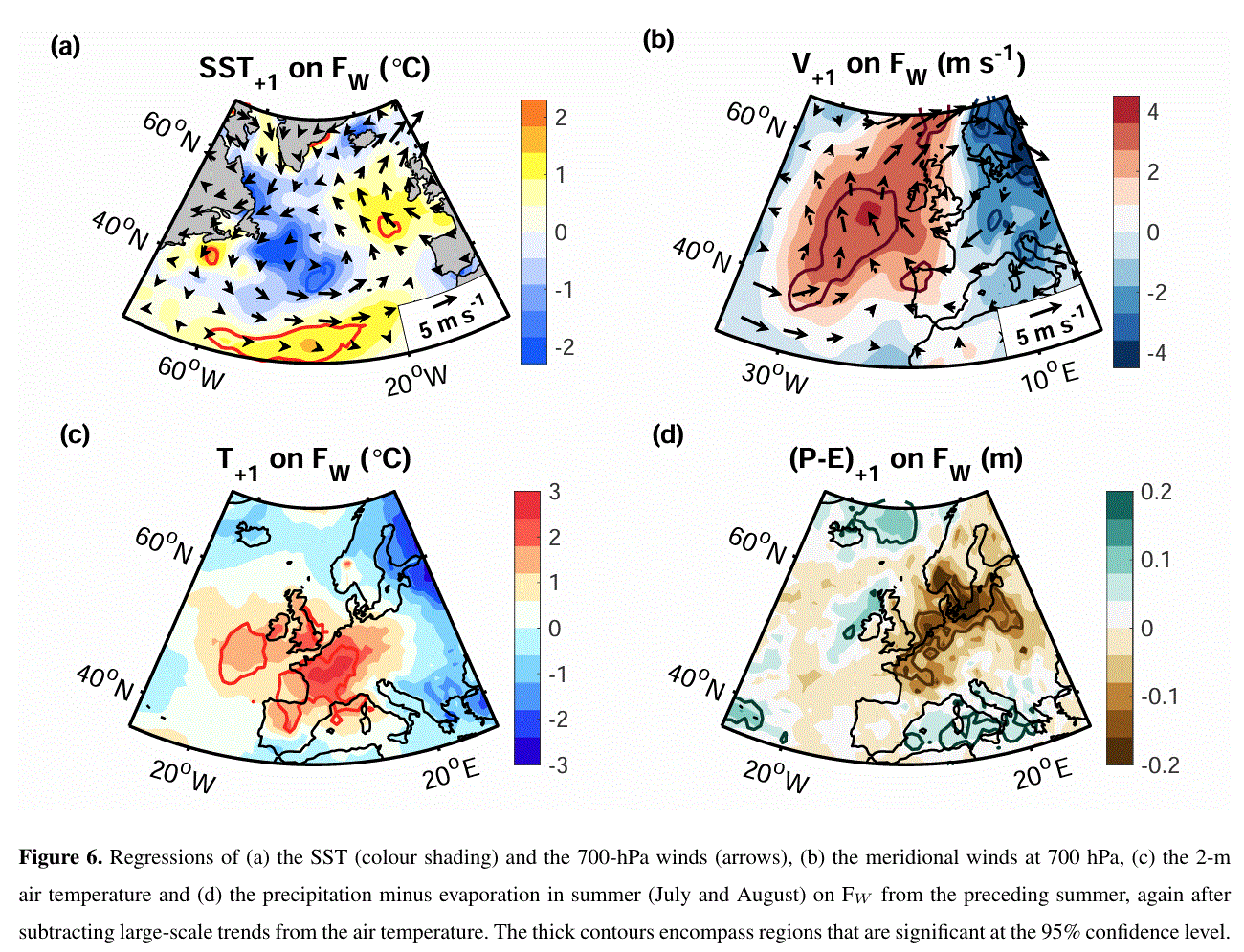
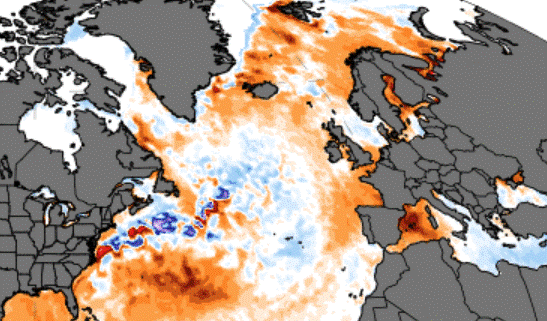
These southerly winds then cause SSTs in our vicinity and the Mediterranean to warm, which can be part of the reason why the Mediterranean Sea is warming fastest in summer (shown in the figure below). Combine that with the Icelandic Low, and the stronger SST contrast in the North Atlantic between the cold blob and further south (due to the expanding Azores High and subtropical gyre), and you have the jet stream more persistently staying to our north, driving further hot, dry weather.

This reinforces the same SST patterns, making this like a self-purpetuating feedback. Given that the Mediterranean Sea is warming, and will continue to warm with the coming heatwave, it may cause the same problems in mid-range weather modelling, where weather models continue to underestimate how hot this summer gets.


Comments
Post a Comment